Agriculture & Water: An Irish Problem
Rivers, runoff, questionable connections, and the industry's pollution of Ireland's waters — and how citizen science can help
by Jack MapelLentz • December 2025
Chapter 1
An introduction
Say you ask someone on the street what first comes to mind when they think of Ireland —
Rolling hills of green grass, they might say
or rain,
maybe even sheep.

Water sustains all these; that rain falls to nourish the grass, covering the fields upon which the sheep graze. It’s the lifeblood of the island. Ireland is blessed with a preponderance of lakes, streams, rivers, and bogs — over 84,800 km of rivers and 1,280 km² of lakes and reservoirs [34]. It wouldn’t be an understatement to call these waters a national treasure. And it may thus be surprising that many of them are polluted, have long been, and look to be for the foreseeable future, unless something is to change. Meanwhile, Ireland’s agricultural industry has long worked overtime, maintaining deep relationships with the governmental entities intended to regulate it, to ensure that change remains far on the horizon.
Luckily, government programs and grassroots efforts have shown success at maintaining waters in a healthy state. As part of a project in collaboration with Dr. Susan Hegarty at Dublin City University, Kevin Mulligan and Fidel Walsh of Co. Cavan, and the Nanovic Institute at the University of Notre Dame, my research partner Christine Hruby and I worked on a citizen science-driven water quality monitoring program in Cos. Cavan and Monaghan, focusing on Castle Lake and the Upper River Annalee. Nearly a year into the program, results are encouraging — yet the data still show evidence of acute impairment of waterways in areas with particularly intensive agricultural and industrial activity.
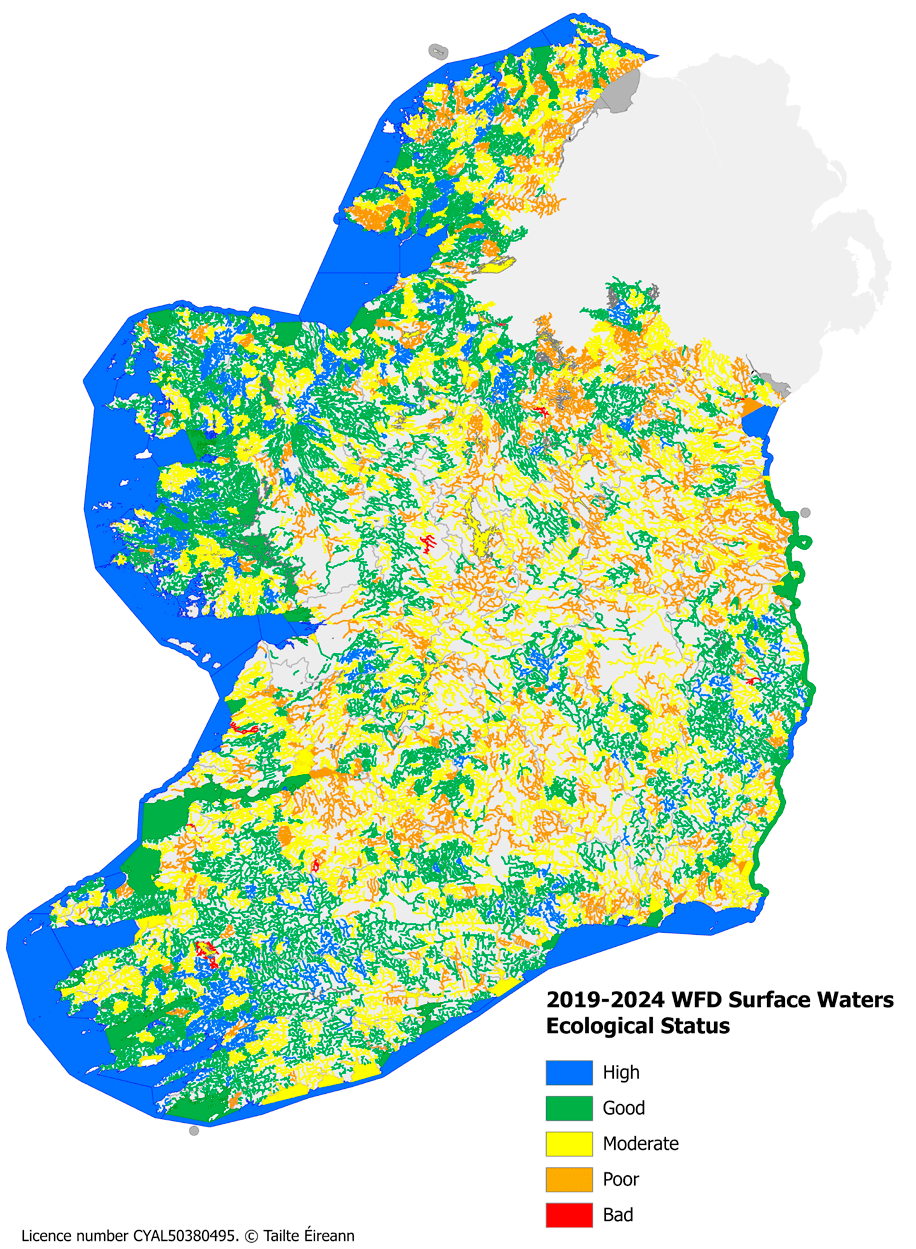
This problem is a systemic one, impacting every county in the country and with roots in economics and culture. Barely half of Ireland’s bodies of water have an ecological status of at least “good,” as measured by the EPA from 2019–2024 — leaving the remaining 46% with a status of moderate, poor, or bad @feeleyWaterQualityIreland. And that’s a 2% decline from the 2016–2021 period [34]. Lakes fare better than the average body of water, but 32% still have a moderate to bad status. Rivers are worse, at 52%. “Water quality is declining,” the report’s authors wrote — not dramatically, but slowly and surely. Since the monitoring program started in 2007, in fact, overall water quality has only ever worsened.
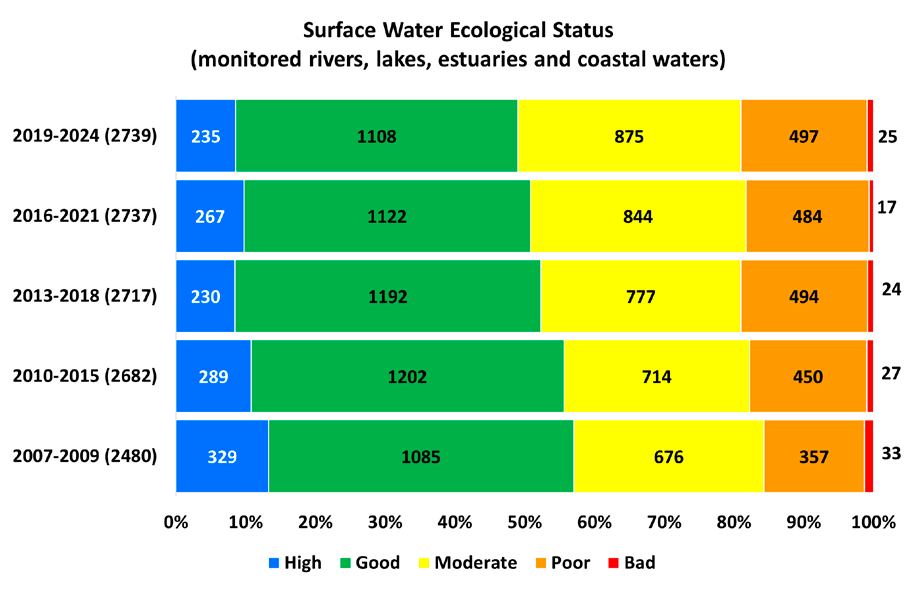
There are several reasons for this, but by far the largest one is agriculture. Farming impacts over 1,000 bodies of water, according to the EPA, more than double the next-largest factor. 1 That’s an increase of about 30% from the EPA’s 2018 report.
When rain falls on fertilized fields, it flows over crops and soil as it runs off, picking up and carrying with it nutrients, most importantly nitrogen and phosphorus. These are typically limiting nutrients in ecosystems — a river might have plenty of dissolved oxygen and lots of food available, but if there isn’t enough nitrogen or phosphorus to go around, nothing can grow beyond what they’ll support. That’s precisely what makes them such potent fertilizers. Their power fed billions as the Green Revolution swept the globe. By allowing for intensive agriculture, they made Ireland one of the world’s most productive agricultural regions. But when those nutrients wash into rivers, they wreak havoc precisely because they are so powerful.
The government has already begun some actions which aim to address this. A report from the Department of Agriculture, Food and the Marine notes how chemical nitrogen usage on farms has declined 30% since 2018 [32]. Farms applying an intensive amount of nitrogen must also now use low emission slurry spreading equipment, which is subsidized by a government program, helping to reduce the potential for nutrient surface runoff [21]. And a new National Fertilizer Database was implemented which tracks the supply chain from import to purchase. But despite these efforts, pollution levels largely remain the same. From 2016–2021, the number of satisfactory lakes declined by 2.7% [34], and decline continued into 2023 [33].
This is not a new phenomenon: indeed, Ireland has been aware of the problem for decades. Academic research brought it to light by the 1980s, and in 1991 the EU’s Nitrates Directive, a legally-binding measure to cap nitrate usage, came along [5].
Ireland, though, has retained a derogation for the directive, exempting it from the legislation’s stricter limits. Under the scheme, farmers must apply to the Irish government yearly for exemptions to its limits, and every four years Ireland itself must seek EU approval for renewal. Nitrogen application is limited to 250 kg/hectare/year, and in 2024 it was further limited to 220 kg/ha/year in polluted areas. But that still easily exceeds the directive’s quota of 170 kg/ha/year.
Irish media coverage of the derogation paints it as a necessity: even as recently as this March, an RTÉ article quoted the Minister for Agriculture describing it as “a critical element in the economic sustainability of many family farms in Ireland” whose “loss would have significant consequences for them” [14]. Underscoring this, the author writes that “If Ireland’s nitrates derogation is lowered, farmers would have to take measures such as culling cows, exporting slurry, or acquiring more land to abide by lower limits.” The RTÉ article also quotes the manager of the EPA’s Water Programme and concludes with her saying that considering a reduction in nitrates in preliminary early-2024 data, “it looks like we’re starting to go in the right direction but improvement is still needed.”
That 2024 data has since been finalized and is included in the most recent EPA report. And indeed, despite decades of stagnation, things really do seem to be improving! Consider this graph:
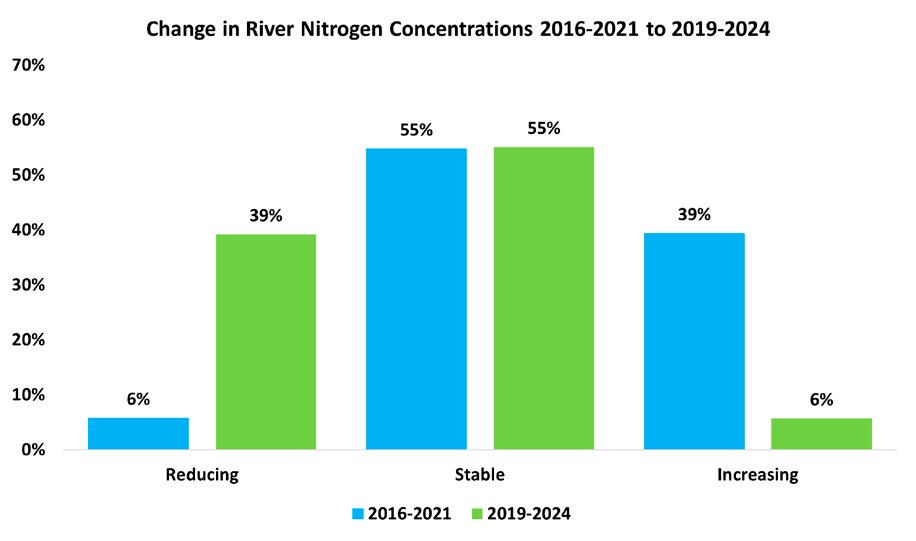
The data are exactly the opposite of the 2016–2021 period! Previously, 39% of rivers had worsening nitrate levels — now, 39% of rivers are improving, and only 6% are worsening.
These gains provide hope, at least for reduced nitrate levels. But to say that “improvement is still needed” is quite an understatement. Gains in water quality take place against the backdrop of decades of decline. And while the nitrate programs have yielded tangible improvements, phosphorus levels remain high and stagnant. 2 There is yet a ways to go until Ireland’s rivers and lakes might be called healthy, and the Irish state remains noncommittal to more substantive efforts.
Simon Harris was Ireland’s Taoiseach from 2024–2025 and is currently its Tánaiste. While his government noted that “Nearly half…of our surface waters are not ecologically healthy” and “The most significant issue affecting water bodies…is nutrient pollution,” [18], he went so far as to call the the nitrates derogation a “national asset” [25]. Despite decades of awareness of the severity of its water quality problem and a fairly clear path to fixing it — efforts which are now substantiated by the 2019–2024 data — the Irish government still sends mixed messages and seems unmotivated to take more decisive action. Why?
Chapter 2
Subtitle
Agriculture is no longer the giant of the Irish economy it once was — it accounts for only around 1% of the country’s GDP, a figure it has danced around for twenty years [2], and constituted 4% of employment in 2022, continuing a decade of slow decline [17].
Yet it remains an essential part of the Irish psyche — even on a global level. Going to the grocery store abroad and seeing Kerrygold butter conjures up images of lush green fields and placid cows. And it’s true that in many ways Ireland is still a largely rural country. A third of the population calls home communities of fewer than 1,500 people; including small towns and villages bumps the figure up to over half the nation.
Farming is the backbone of rural Ireland. Our Rural Future, a 2021 report from the Department of Rural and Community Development, notes that “For rural communities, agriculture is as much about identity and a way of life as it is about economic and environmental sustainability” [26].
This is, of course, in many ways a wonderful thing. Agriculture provides a cultural touchstone for generations of Irish people. Ireland’s rolling green fields are understated, beautiful, and internationally renowned — the stuff of billboards. And there’s nothing quite like needing to stop on a one-lane road to wait for the sheep to cross.
!! insert photo here
But there exists a darker side of Irish agriculture — a side which might occasionally be more aptly described as sinister. Perhaps because of the country’s strong cultural associations with farming, and despite its waning role in the economy, the agricultural lobby in Ireland is remarkably effective and retains considerable sway over its politics. The Taoiseach’s comments on the derogation are only the tip of the iceberg. DeSmog, a climate-focused investigative journalism organization, compiled a map of the connections between Ireland’s agricultural industry, research institutions, and the Irish government, and it looks like this [22]:
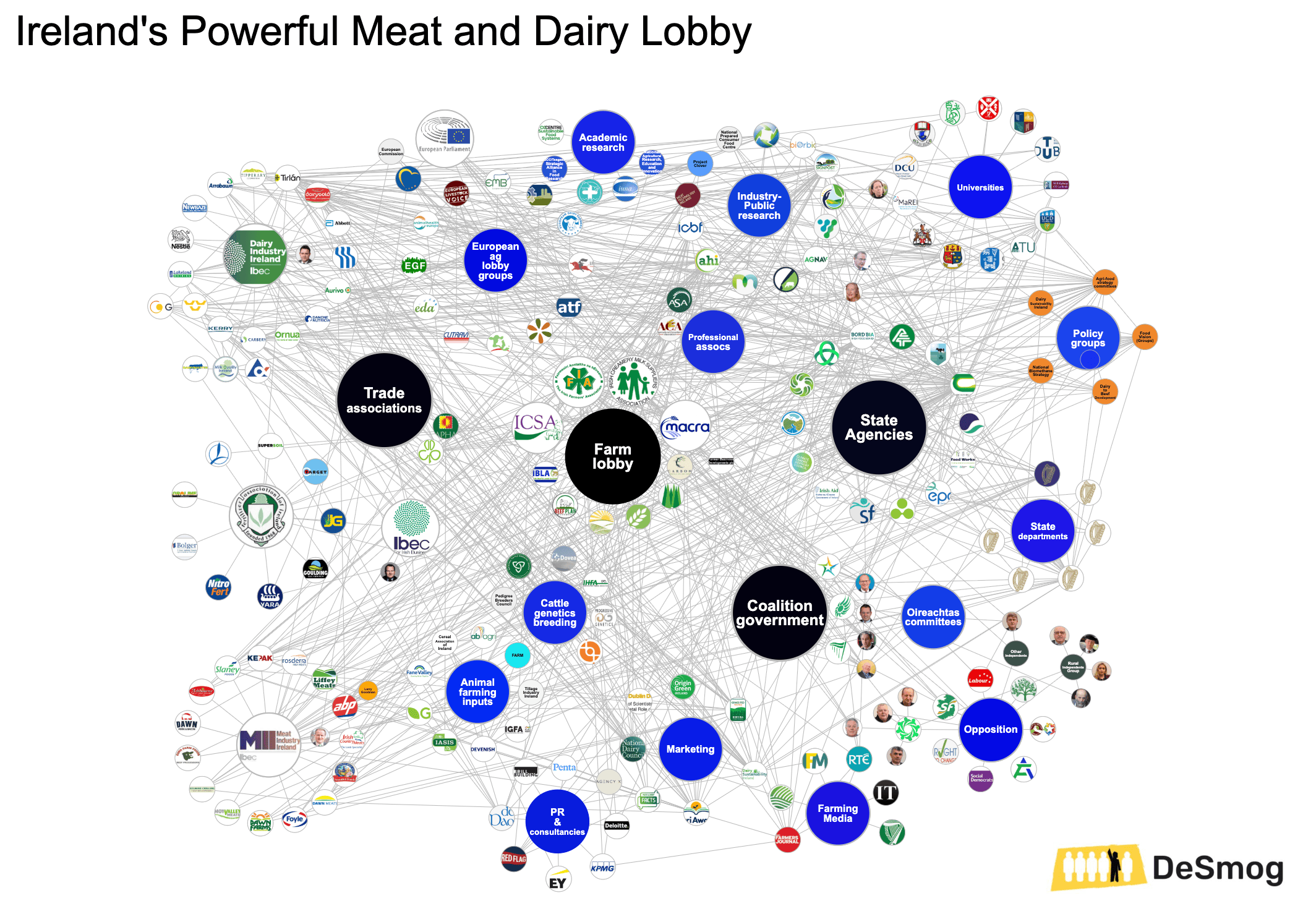
This is quite the lobby. Indeed, the report’s authors note that the Ibec, the institution representing the country’s dairy and meat industries, is “Ireland’s largest business organisation and most active lobbyist on the official register” [22]. All three of Ireland’s major political parties — Fianna Fáil [3], Fine Gael [4], and Sinn Féin [28] — are not only in decisive favor of renewing the derogation; they also hold it as a positive good that Ireland possesses this exemption. Is this a coincidence? Simon Harris, then Taoiseach, met with Dairygold executives at their headquarters on 10 May 2024 to discuss the nitrates derogation 3 [6]. By September he had adopted the “national treasure” label [25].
This tight connection between the agro-industrial sector and the government is nothing new. Agriculture is, of course, what defined Ireland for much of its history, particularly before independence. It was the breadbasket of a rapidly-industrializing England: “In Act II of the Industrial Revolution,” writes Welsh economist Brinley Thomas, “England, as an interim measure, drew heavily on the land resources of her Celtic periphery, particularly Ireland” [10]. The potato’s historical importance among Irish crops is well-known, as is how its failure in the face of blight led to the devastating Great Famine of 1845–1852 [30].
But a more easily-overlooked facet of Irish agriculture is its animals, especially its cattle. “The pastoral tradition in Ireland was overwhelmingly oriented towards cattle” [19] even prior to the famine. This continued to be true into the late 20th century: in 1993, James Clarity of the New York Times wrote that “The place of cattle, in Irish mythology as well as contemporary economic life, is clear here. On the national television crime-stoppers program, pictures of stolen tractors and mowers are regularly shown and cattle medicines are advertised in prime-time slots along with beer and detergents.” By playing to this keystone position as Ireland modernized in the 20th century, the meat and dairy industry shrewdly garnered considerable political influence. And every thread in the story stretches back to Larry Goodman.
The Goodman saga
Goodman took his roots as the son of a sixth-generation cattle farmer and began a relentless climb to the apex of the beef sector [29]. He made a career of turning failing processing plants around, piece-by-piece assembling an empire, and by 1989 his firms accounted for 4% of the entire Irish GDP [12]. And as he expanded his sphere of influence, he soon intersected with the government, particularly Fianna Fáil, to which he “was a regular donor…handing over tens of thousands of pounds of donations over the years” [29]. Indeed, “In one fortnight in 1987 alone, the party got £105,000 from three companies: Goodman International, Master Meats and Hibernia. Donations of £25,000 or £30,000 sometimes coincided with key moments in the process of conferring large public benefits on these companies.” [8] After a series of allegations of corruption, the now-infamous Beef Tribunal was convened to investigate the validity of the claims. The findings were damning. A litany of abuses were uncovered — tax evasion, systematic theft of EU beef, tampering with official documents, and more [12]. But most importantly for our story, nestled among the claims was “allegations of political influence” [27].
In a bizarre turn of events, Iraq, then under Saddam Hussein’s regime, played a key role in exposing how deep the ties between Goodman’s companies and the Irish government ran. While the investigation was underway, and as the company’s obfuscated finances were untangled, it suddenly looked like Goodman Group was actually about to go insolvent and collapse. It had sold millions of tons of beef to Iraq throughout the 1980s, and by 1990 the country owed it $72 million, which it was slowly repaying [16]. But when Iraq invaded Kuwait, its checks ceased to flow, wiping out a large portion of Goodman Group’s income [12]. The company was kept afloat only by emergency action by the Taoiseach of the time, Charles Haughey. Goodman turned out to have extremely close ties to Haughey [13], and Haughey himself was later denounced for corruption that ran rampant during his long reign as the head of state.
What then?
So what does this all have to do with the nitrates derogation and, by extension, the pollution of Irish waters? For us, the Goodman saga is a case study — a poster child for the uncomfortably close ties between the government and the agricultural industry. And the kicker of it is that after all the state’s failings and all Goodman International’s abuses were laid bare, after all the under-the-table deals, which siphoned taxpayer funds and hurt Ireland’s development for years, were brought to light… the consequence was “virtually nothing,” in the words of Fintan O’Toole. Irish Independent journalist Frank Mulrennan pithily titled a 2021 retrospective, “How a tribunal costing over €36m achieved precious little”. No one was charged except the journalist that brought the corruption to light, since she wouldn’t reveal her sources [31]. (She was, thankfully, acquitted.)
Goodman quickly regained control of his companies. His company, renamed ABP Food Group, now “accounts for 20% of the Irish cattle kill” [23]. As of 2020, he was Ireland’s fourth-richest person [36]. He finally stepped down from ABP last year, capping off an illustrious — or, depending on your perspective, infamous — career. After all the fuss, nothing much changed.
That the same company lives on today, reincarnated, is almost poetic. Precious little changed indeed, and the same companies still talk with the same political parties. ABP itself retains close ties with Teagasc, Ireland’s state Agriculture and Food Development Authority [22]. It also contributed directly to the Food Vision 2030 document, a ten-year strategic plan whose stated goal is that Ireland become a leader in what they call “Sustainable Food Systems” [11]. It serves to “direct government support for agricultural production, climate mitigation and pollution limitation” [22]. Yet agricultural juggernauts led the authoring of the document, and the government essentially just signed off on it. The environmentalist bloc of its stakeholder committee reigned after seeing the final draft [7]. “A masterclass in greenwashing,” one critic called it.
In short: years on, and millions of dollars later, there is still little separation between the industry and the government intended to keep it in check.
But they’re not the only ones with an ear to the ground — or an eye on the water. Meet the citizen scientists, who, armed with nutrient test kits, bug nets, and smartphone cameras, are keeping tabs on Castle Lake and the Upper Annalee, keeping their slice of Ireland pristine.
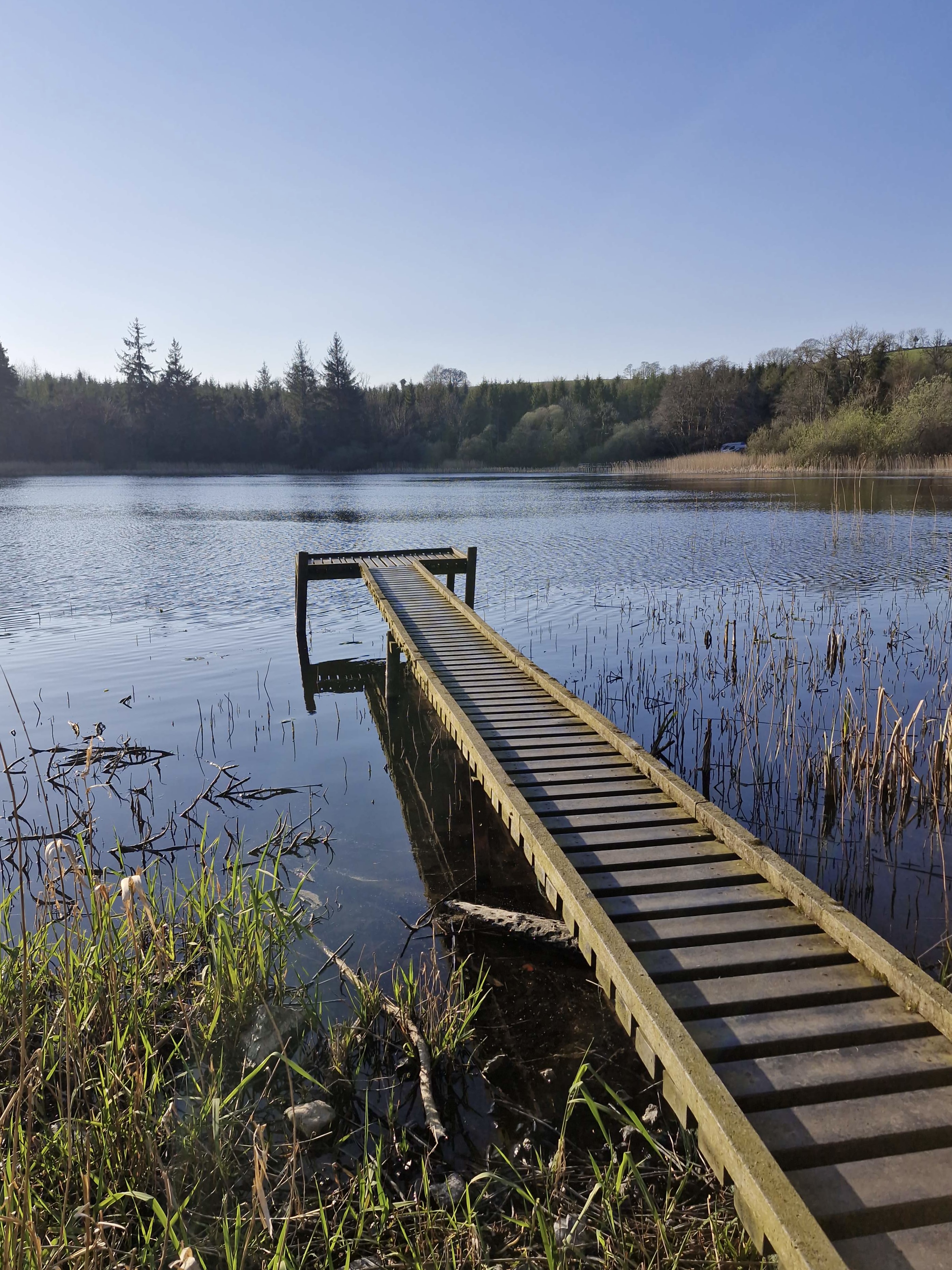
Photo courtesy of a project participant.
Chapter 3
The citizen scientists of Cavan & Monaghan
Kevin V. Mulligan is, by day, a historian. Fidel Hogan Walsh pens poems. Together they monitor Castle Lake, a jewel of the Bailieborough community. Listen to just one of Fidel’s poems and you might find yourself believing that you really are right there, on the shore.
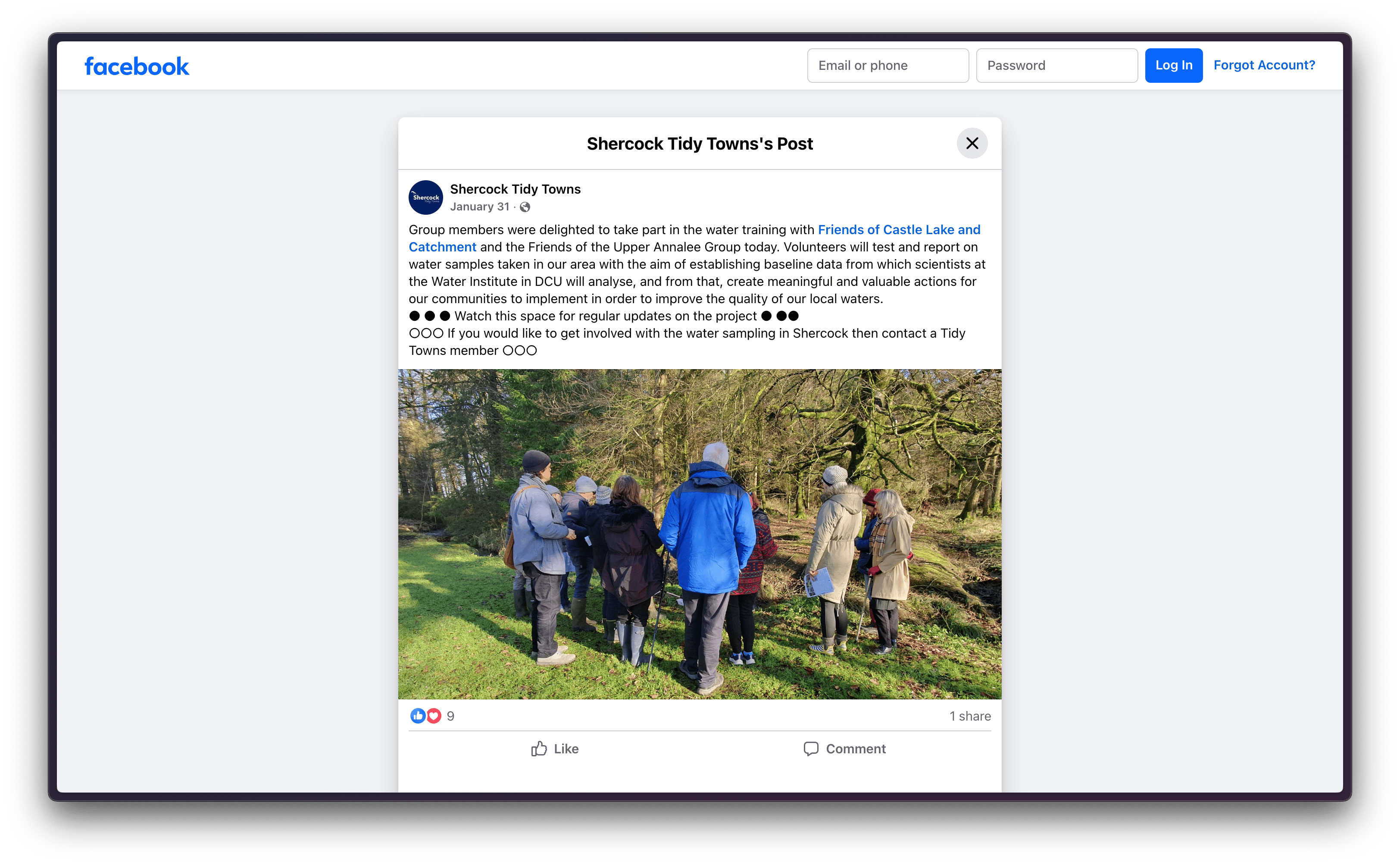
Kevin and Fidel are members of Friends of Castle Lake and Catchment, a grassroots organization who understatedly describe themselves as “a group of concerned patrons” of the lake. Together, they’re spearheading a citizen-science program developed by Dr. Susan Hegarty of Dublin City University. Dr. Hegarty led a project called Urban Citizen’s 632, 4 in which citizen scientists — members of the surrounding community — colleted data on rivers in the Dublin area. That project, which concluded earlier this year to great success, proved the viability of the citizen science model for water quality monitoring and laid the groundwork for this program. 5
Alongside the Friends of Castle Lake, a group in the neighboring Upper River Annalee catchment area is testing sites in parallel. Castle Lake is an area of concern as a site of outstanding natural beauty, while the Upper Annalee cachment area — though itself beautiful — is home to a number of group water schemes, a co-operative model in which community members collectively own and maintain a water distribution system. Group schemes which use surface water sources are particularly succeptible to pollution and contamination, and Cos. Cavan and Monaghan have a high number of them, so ensuring that the area maintains high water quality is important for public health.
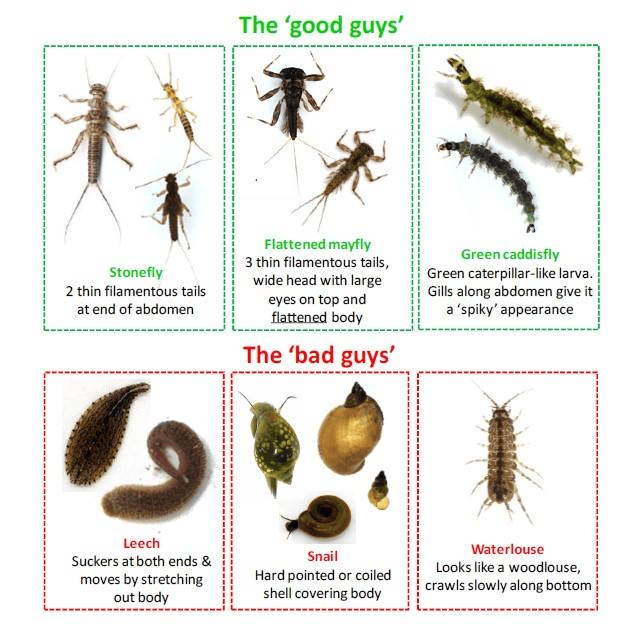
Survey responses are collected via ArcGIS, and the protocol includes an assessment of the test site environment 6 plus temperature, nitrates, phosphates, turbidity, and an optional CSSI test. The CSSI test uses the presence of six invertebrates to gauge the water body’s health — there are three “good guys” whose presence indicates healthy water, and three “bad guys” who thrive in a polluted environment. 7
Since its inception at the beginning of this year, there have been over 250 submissions. Dozens more submissions are sent in each month.
And from a bird’s-eye view, things are actually looking pretty good! Across all sites, as of the time of writing, the average nitrates were 0.396 mg/L; phosphates, 0.068 mg/L; and CSSI score, 2.678. Those are all within the acceptable range. But a handful of localized spots do stand out.
This map shows phosphates across the test sites, normalized by the average of the data set.
Here are the nitrate readings. Notice how all the areas with the arrows have stayed red.
Finally, here is the CSSI map. Not much better. 8
The southernmost site is particularly interesting. It’s just downstream of Lakeland Dairies’s Bailieborough plant, which is the largest milk-drying plant in Europe. @LookLargestDairy Maybe the data here are not enough to establish a causal relationship; maybe the stream is healthy enough. But it is worth noting that it appears to be routinely below average for all three metrics.
I was curious about this, so I drilled down a little further. I grouped data points based on proximity with a Python script and singled out the set of tests from sites adjacent to Lakeside Dairies.
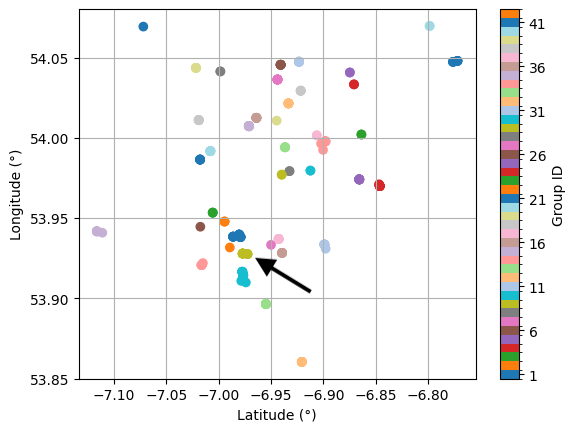
Note that Ireland’s environmental quality standards (EQS) for phosphates are <0.025 mg/L (high water quality) and <0.035 mg/L (good water quality). Ireland does not have an EQS for nitrates in rivers, but the EPA says negative environmental impacts start at levels >8 mg/L NO3.
Note: on small screens, you can scroll the table horizontally.
| date | nitrates | phosphates | turbidity | final CSSI | |
|---|---|---|---|---|---|
| 13 | 2025-03-08 11:25:00 | 1-2 | 0.1-0.2 | 30 NTU | NaN |
| 24 | 2025-03-16 14:39:00 | 0.2-0.5 | 0.02-0.05 | <14 NTU (tube filled to top) | -1.0 |
| 61 | 2025-04-07 17:18:00 | 2-5 | 0.02-0.05 | 30 NTU | NaN |
| 62 | 2025-04-07 17:35:00 | 1-2 | <0.02 | 50 NTU | NaN |
| 66 | 2025-04-11 18:13:00 | 1-2 | 0.05-0.1 | 75 NTU | 0.0 |
| 80 | 2025-05-06 09:15:00 | 5-10 | 0.02-0.05 | 25 NTU | NaN |
| 81 | 2025-05-06 09:31:00 | <0.2 | 0.02-0.05 | 40 NTU | NaN |
| 85 | 2025-05-06 10:32:00 | 1-2 | 0.05-0.1 | 75 NTU | -1.0 |
| 160 | 2025-07-25 15:52:00 | 0.5-1 | 0.2-0.5 | <14 NTU (tube filled to top) | NaN |
| 212 | 2025-09-30 10:25:00 | <0.2 | 0.02-0.05 | 15 NTU | NaN |
Nitrates are well within the acceptable range. 9 But phosphates are another story. The average of these data is 0.085 mg/L, which easily exceeds the standard. More analysis might be necessary to establish a definitive causal relationship. But it is, at the very least, striking that the stream has elevated phosphate levels; it’s worthy of further investigation.
Over the coming months, Christine, our resident statistician, will be thoroughly analyzing the hundreds of data points we’ve collected. But even these preliminary results show the power of the citizen science model: it puts the power of quantative oversight into the hands of those who care most about their waters. By democratizing data collection, perhaps the collective voice of concerned residents may outlast the lobbyists’.
Chapter 4
In conclusion
Considering the Goodman ordeal for another moment: is something similar occurring with pollution of Irish waterways? The present issue feels less immediate. 10 But in another sense, pollution from agricultural activity is even more destructive than financial wheeling and dealing. Ireland is a small island nation, and its environment — its common fabric — has long suffered because of over-extraction. While some progress has occurred, a great number of Irish lakes and rivers remain burdened by pollution. And just as the Beef Tribunal led to a long list of revelations without much in the way of action, awareness of the problem does not appear to have translated into wholly adequate changes. Instead, the government pursues, at the behest of the industry, to uphold the status quo, 11 while the rest of the European Union moves on.
Dr. Constanze O’Toole of Rivers Trust Ireland offered a level-headed assessment of the situation in an Irish Times piece, saying that “most of the governance apparatus is there to improve water quality but we must take affirmative action to ensure it all works together for the desired outcome” [23]. The farm lobby has to date ensured that such action has been difficult: the infrastructure may exist, but a culture of avoidance deters anyone from pulling the lever.
In the meantime, Irish waterways continue to suffer, while the giants of the agricultural industry profit, offloading the negative externality onto the local communities and, by extension, the people of Ireland. Without detangling itself from the pervasive influence of the agricultural industry, the Irish government will continue to be hindered in its ability to protect the integrity of the environment.
This is where the citizen science model — and the Castle Lake/Upper Annalee project — comes in. A model for community-driven monitoring of water quality, it encourages accountability and transparency, shedding light on exactly where pollution is routine. By involving the community, not only is data gathered sustainably and efficently, but it fosters a personal connection to what’s at stake.
Back matter
Acknowledgements
A great many wonderful people made this project possible. I would never have known about this whole thing if not for my friend and research partner Christine Hruby, who connected me with the most wonderful Dr. Susan Hegarty. Seriously, both of them are incredible individuals, and not only am I greatly indebted to them for their work on this project — I’m just really fortunate to have met them. Sometimes I think about how lucky I am to have had the chance to cross paths with them in this chaotic world. I also am so thankful for Dr. Morgan Munsen at Notre Dame’s Nanovic Institute for European Studies, who was instrumental in making this happen: she led the inagural run of the Sustainability Fellows research program, but likewise is just a phenomenal person. Dr. Munsen, thank you so much for your kindness and support and for bearing with me during the lengthy process to bringing this to fruition(!)
And, of course, a huge thank you is in order for Kevin Mulligan and Fidel Walsh. I don’t know who else would pick up two random college kids from the Expressway bus stop in Virginia and drive us all over the back roads of Co. Cavan. You live in a beautiful place, and I hope I might learn to be as welcoming and selfless as you someday. Fidel, your poetry brings me joy without fail, and Kevin, I think you have the most impressive reverse-driving skills I’ll ever see. Thanks for everything.
Colophon
This website was built with Bridgetown, a Ruby-based static site generator, using Tailwind CSS. Scrolling effects are implemented using the Scrollarama JavaScript library. Footnotes use the Littlefoot library, and tables use the simple-datatables library. Text is set in the Libertinus Serif family of fonts.
References
-
The second-largest factor is hydromorphological changes, like dredging and drainage, which impact 453 bodies. Other factors, like forestry, wastewater, peat, and industry, impact around 100–200 bodies of water each. ↩
-
For the rivers measured over the 2016–2021 period, 15% had reducing phosphorus (which is the goal), 63% had stable phosphorus, and 17% had increasing phosphorus. From 2019–2024, 12%, 73%, and 16% were reducing, stable, and increasing, respectively. If anything, these data represent a slight step backwards. ↩
-
There is a poetic element to this encounter: the Taoiseach went to visit their headquarters, not the other way around. ↩
-
The name is a reference to one of the United Nations’s Sustanible Development Goals. Read more here. ↩
-
The project noted significant differences in water quality between Dublin’s North and South sides, and unsurprisingly, water quality by the airport is negatively-impacted. I highly encourage looking at their results. ↩
-
Bed composition, land use, recent weather, and the like. ↩
-
Stoneflies, flattened mayflies, and green caddisflies are the “good guys;” the “bad guys” are leeches, snails, and waterlice:
 ↩
↩ -
If you’re wondering why the map looks more sparse here: the CSSI test is more involved than the phosphate and nitrate tests, so fewer participants perform it. ↩
-
Especially considering that one of the data points appears to be an outlier. ↩
-
In that the country’s taxpayer-funded assets are not being gambled on risky investments for a private company in an unstable country. ↩
-
Quite literally, by seeking an exemption to the rules (i.e., with the nitrates derogation). ↩